
Food Safety & Quality
Food Quality and Safety Control & Compliance Assessment
SPEA Approved Certificate
Overview
Practical skills in food inspection, compliance assessment, and inspection reporting.
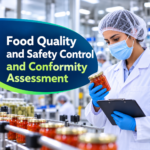
- This training course aims to develop participants’ practical skills in food quality and safety control by introducing essential food inspection requirements and methods for verifying the compliance of food products and operational processes with applicable standards and requirements.
- The course focuses on inspection procedures, hygiene assessment, verification of food storage and handling conditions, review of food labels and operational records, and the identification and documentation of nonconformities.
- Through practical exercises and case studies simulating real-world food facility inspections, participants develop the ability to prepare inspection checklists, document findings, and produce professional inspection reports with recommendations that support food quality and safety improvement.
Who Should Attend
- Food Quality and Safety Officers and Supervisors.
- Food Inspection and Compliance Personnel.
- Food Production and Operations Supervisors.
- Food Storage, Warehousing, and Handling Supervisors.
- Supervisors in Restaurants, Hotels, and Catering Companies.
- Graduates in Food Science, Food Technology, and Related Disciplines
Learning Outcomes
- By the end of the course, participants will be able to: Differentiate between food quality, safety, and compliance assessment requirements.
- Apply food inspection techniques using structured checklists.
- Assess hygiene practices and food storage and handling conditions.
- Verify the compliance of food products, labels, and operational records with applicable requirements.
- Identify nonconformities, classify findings, and document supporting evidence.
- Prepare inspection reports presenting compliance assessment results and appropriate recommendations.
Course Outline
-
Module 1: Fundamentals of Food Quality and Safety Control
• Food quality, safety, and compliance concepts. • Objectives and scope of food safety inspections. • Relevant requirements, standards, and specifications. • Inspection responsibilities and planning procedures.
-
Module 2: Inspection of Food Facilities and Operations
• Inspection, observation, and verification techniques. • Assessment of hygiene practices, equipment, and facilities. • Control of food storage, handling, and temperature conditions. • Preparation of inspection checklists and collection of compliance evidence.
-
Module 3: Compliance Assessment and Documentation
• Examination of food products, labels, and expiry dates. • Review of operational and monitoring records. • Identification of nonconformities and classification of findings. • Documentation of evidence and inspection results.
-
Module 4: Practical Inspection and Reporting
• Simulated food facility inspection. • Application of inspection checklists to a case study. • Analysis of findings and compliance assessment. • Preparation of inspection reports with observations and recommendations.
Assessment
Practical assessment through a simulated food facility inspection case study, including completion of an inspection checklist, identification of nonconformities, and preparation of a brief inspection report. Participation in training activities is also assessed.